

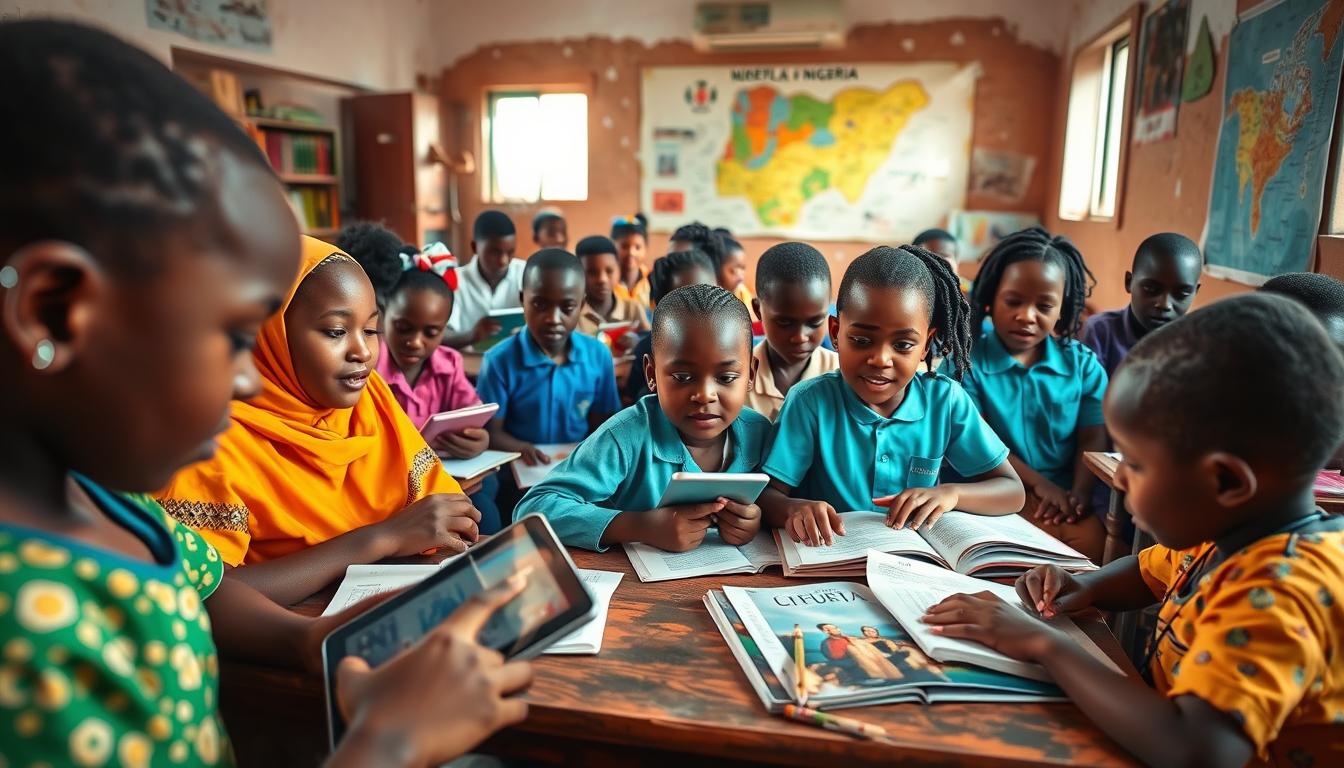
I’m excited to share a guide on education in Nigeria. It covers primary schools to universities. My goal is to give you insights into the Nigerian education system. You’ll learn about both traditional and modern learning methods.
Exploring Nigerian schools will help you understand your options. We’ll look at primary education to higher education. I’ll make sure you know what to expect at each stage. This guide covers both traditional and modern learning methods in Nigeria.

Introduction to Nigerian Education
In this guide, I’ll share my knowledge on Nigerian education. You’ll learn about the benefits of Nigerian schools and higher education opportunities. By the end, you’ll know the ins and outs of education in Nigeria and be ready to make the most of your learning experience.
Key Takeaways
- Education in Nigeria offers a wide range of options for students
- Nigerian schools provide a solid foundation for learning success
- Understanding the Nigerian education system is crucial for making informed decisions
- Higher education in Nigeria provides numerous opportunities for growth and development
- Modern approaches to education in Nigeria are becoming increasingly popular
- Navigating the educational landscape in Nigeria requires careful consideration
Understanding Nigeria’s Education System: My Overview
To understand Nigeria’s education system, we must look at its structure and policies. It aims to give quality education to all, from young children to university students. The Universal Basic Education (UBE) program is a key policy that shapes learning in Nigeria.
The UBE program makes education free and compulsory for all school-age kids. This has helped more kids go to school. Also, new reforms have added subjects like entrepreneurship. This helps students get ready for the job market.
- Early childhood education: This stage focuses on providing a solid foundation for future learning.
- Primary education: This stage builds on the foundation established in early childhood education and provides a broad-based education.
- Secondary education: This stage provides more specialized education and prepares students for tertiary education or the workforce.
Recent reforms have also highlighted the value of technical and vocational education. This offers students different ways to succeed. By knowing about Nigeria’s education system and policies, we see the efforts to improve education quality.
Primary Education: Building Strong Foundations
Primary education in Nigeria is the start of a child’s learning path. It’s where they learn important skills and knowledge for their future. Elementary schools in Nigeria are key in giving basic education to kids aged 6 to 11.
In primary education, students learn many subjects. These include math, English, science, and social studies. When they finish, they get the First School Leaving Certificate. This is a big step in their education. Basic education helps kids get the skills and knowledge they need to do well in life.
But, primary education in Nigeria faces challenges. Classrooms are often too full, and resources are limited. Yet, efforts are being made to make education better. Private schools are also helping by offering quality education. Here are some important things about primary education in Nigeria:
- Age range: 6-11 years
- Subjects taught: mathematics, English language, science, social studies
- Certificate awarded: First School Leaving Certificate
In conclusion, primary education in Nigeria is very important. It’s crucial to give kids quality basic education. This helps them get the skills and knowledge they need to succeed in life.
| Level of Education | Age Range | Certificate Awarded |
|---|---|---|
| Primary Education | 6-11 years | First School Leaving Certificate |
The Path Through Secondary Education in Nigeria
Secondary education in Nigeria is split into two parts: Junior Secondary School and Senior Secondary School. I will explain the curriculum, exams, and how students move from junior to senior school.
Nigeria has many choices for secondary education. High schools in Nigeria can be public or private. Knowing the differences helps in choosing the right school.
Junior Secondary School Overview
In junior secondary school, students learn many subjects like math, science, and languages. This is a key time for building a strong foundation for the future.
Senior Secondary Education Options
Senior secondary school lets students focus on specific areas, like science, arts, or commerce. It prepares them for college and their careers.
Choosing Between Public and Private Schools
Choosing between public vs private schools is a big decision. Public schools are cheaper, but private schools have better facilities and smaller classes. The choice depends on what each family needs.
In conclusion, finding the right path in secondary education in Nigeria takes careful thought. Knowing the differences between junior and senior school, and public and private schools, helps make the best choice for education.
Higher Education Opportunities Across the Nation
Exploring higher education in Nigeria is exciting. There are many universities in Nigeria, colleges, and other schools. It’s important to know the different types and what they offer.
Top universities in Nigeria include the University of Lagos, University of Ibadan, and Ahmadu Bello University. They have programs in engineering, medicine, arts, and humanities. Nigeria also has private universities and colleges for students.
The admission process in Nigeria involves JAMB and post-UTME screenings. Here are some things to think about:
- Academic programs and specialties
- Admission requirements and processes
- Location and campus facilities
By looking into these factors, students can choose the right school. Whether it’s a public university or a private college, Nigeria has options for everyone.
Technical and Vocational Education: Alternative Pathways
Exploring technical and vocational education in Nigeria is exciting. It shows many paths beyond traditional school. These paths focus on practical skills, not just book learning. Technical schools give students real-world experience, readying them for various careers.
Vocational education lets students learn specific skills in fields like tech, healthcare, and making things. It’s all about gaining expertise in a chosen area. Many technical schools work closely with industries, offering internships and job chances.
- Certificate courses in computer programming and networking
- Diploma programs in engineering and technology
- Skills training in areas such as welding, plumbing, and electrical work
These programs open doors to great careers. Nigeria’s industries need more skilled workers. By choosing technical and vocational education, students can get the skills to thrive in their careers. This helps Nigeria grow economically.
Private vs Public Education: Making the Right Choice
Choosing between private and public schools in Nigeria is a big decision. As a parent, I want the best for my child. I look at the cost and what each school offers.
Private schools are pricier but might have better teachers and facilities. Public schools, on the other hand, offer diversity and real-world prep. The right choice depends on what matters most to you. School choice is a personal decision that needs careful thought.
Here are some key differences to consider:
- Cost: private schools are generally more expensive than public schools
- Quality: private schools may have more qualified teachers and better resources
- Infrastructure: private schools often have better facilities, including libraries and laboratories

By weighing these factors, I can choose wisely. Whether it’s a private or public school, the goal is a quality education. This education should prepare my child for success.
| School Type | Cost | Quality | Infrastructure |
|---|---|---|---|
| Private Schools | Higher | Better | Better |
| Public Schools | Lower | Varies | Varies |
International Schools and Global Education Standards
Exploring international schools in Nigeria is exciting. They offer a global curriculum that’s recognized worldwide. Schools like the International Baccalaureate (IB) or British curriculum are common. This education gives students a wide view, introducing them to different cultures and preparing them for universities abroad.
International schools are great for expatriate education. They meet the needs of families moving abroad. With a global curriculum, students can easily move between schools in various countries. This is perfect for families who often change locations.
Some benefits of international schools include:
- Globally recognized qualifications
- Exposure to diverse cultures
- Preparation for higher education abroad
- A sense of community for expatriate families
In Nigeria, international schools aim to meet global education standards. They focus on global curriculum and expatriate education. This prepares students for success in a global world.
Modern Trends in Nigerian Education
Nigeria’s education sector is changing fast. This is thanks to e-learning and educational technology. Now, education is easier to get, especially in far-off places. Students can find lots of learning materials online, like courses and digital books.
New teaching ways are becoming popular too. Schools are using project-based learning and flipped classrooms. These methods make students think more, solve problems, and work together. It’s all about getting ready for today’s world.
- Digital learning platforms, such as online courses and virtual classrooms
- Innovative teaching methods, including project-based learning and flipped classrooms
- Increased use of educational technology, such as learning management systems and educational software
The education scene in Nigeria is set to get even more exciting. We’ll see more cool teaching ideas. Things like artificial intelligence and virtual reality will likely change education a lot.
| Trend | Description |
|---|---|
| Digital Learning Platforms | Online courses and virtual classrooms |
| Innovative Teaching Methods | Project-based learning and flipped classrooms |
| Educational Technology | Learning management systems and educational software |
In short, Nigerian education is getting better. It’s becoming more open, effective, and fun. With e-learning, educational technology, and new teaching styles, Nigeria’s education is set to thrive. This will help students succeed in today’s world.
Financial Planning for Your Educational Journey
Going to school in Nigeria can be tough, especially when it comes to money. There are many ways to pay for your education. Scholarships in Nigeria are a big help for students.
Scholarships in Nigeria are a great way to fund your studies. You can find scholarships from the government or private groups. Student loans are also becoming more common. They can help with tuition, living costs, and more.
Scholarship Opportunities
- Federal Government Scholarships: These scholarships go to students who do well in school and need money.
- State Government Scholarships: Some states in Nigeria give scholarships to their residents.
- Private Organization Scholarships: Companies and non-profits in Nigeria also offer scholarships.
Student Loan Options
Student loans are another way to pay for school in Nigeria. You can get loans from banks or special student loan providers. Always read the loan details carefully before applying.

Budgeting Tips
It’s important to budget well when you’re paying for school. Here are some tips to help you manage your money:
- Track your expenses: Keep a record of all your spending to see where it goes.
- Prioritize your spending: Focus on the things you really need, like tuition and living costs.
- Save for emergencies: It’s smart to save for unexpected things like medical bills or travel.
By using these tips and looking into different ways to pay for school, you can make your education journey easier. You’ll be able to reach your academic goals.
| Scholarship | Eligibility | Award |
|---|---|---|
| Federal Government Scholarship | Exceptional academic performance and financial need | Full tuition fee waiver and living expenses |
| State Government Scholarship | Residency in the state and academic merit | Partial tuition fee waiver and living expenses |
| Private Organization Scholarship | Academic merit and financial need | Varying awards, including full and partial tuition fee waivers |
Overcoming Educational Challenges in Nigeria
Nigeria’s education system has many education challenges. These include poor infrastructure, not enough teachers, and outdated curricula. To solve these learning obstacles, we need new ways to improve education. One good idea is to support community-based learning programs.
Some effective ways to tackle education challenges are:
- Using digital learning platforms to reach more students
- Training teachers to teach better
- Starting programs in communities to boost literacy and math skills
These efforts can help solve learning obstacles and improve education in Nigeria. Together, we can make education fairer and better for all students.
Improving education is key, and community help is vital. Supporting local efforts and pushing for policy changes can help. This way, we can tackle education challenges and brighten Nigeria’s future for students.
By tackling education challenges and pushing for better education, we ensure all Nigerian students get quality education. This opens doors to many opportunities for them.
Special Education and Inclusive Learning Programs
In Nigeria, there’s a growing focus on special needs education and inclusive learning. These efforts aim to give students with disabilities the same chance to learn well.
Support for students with special needs comes from many places. The Nigerian government has the National Commission for Persons with Disabilities. This group helps make sure policies and programs for people with disabilities are followed.
Available Support Systems
- Government policies and initiatives
- NGO support and advocacy
- Specialized schools and institutions
There are also many disability support services. These include counseling, therapy, and tools to help students. They help students with special needs to reach their goals.
Integration Programs
Integration programs let students with special needs learn with others. They help everyone learn together and support each other.
| Program | Description |
|---|---|
| Inclusive Education Initiative | A program that aims to promote inclusive education and provide support for students with special needs |
| Disability Support Services | A program that provides counseling, therapy, and assistive technology to students with disabilities |
By focusing on special needs education and inclusive learning, Nigeria can help students with disabilities. This way, they can reach their full potential and help the country grow.
Conclusion: Shaping Your Educational Future in Nigeria
As we wrap up this guide to Nigeria’s education, take time to think about what we’ve shared. We’ve looked at everything from primary school to college and beyond. There are many paths to follow, each leading to growth and success.
It’s important to plan your educational journey carefully. Think about your goals, money situation, and what you want to do in life. You might go the traditional school route or try vocational and technical options. The choices you make now will shape your lifelong learning and future.
Education is a journey, not a single event. Always be curious and ready for new challenges. Keep preparing for your career with dedication and a love for learning. With the right educational planning and a commitment to growth, you can create a future that matches your dreams.
FAQ
What are the different levels of education in Nigeria?
In Nigeria, education is divided into primary, secondary, and higher levels. Primary education lasts 6 years. Then, there are 3 years of junior secondary and 3 years of senior secondary. Higher education includes universities, polytechnics, and other tertiary schools.
What is the Universal Basic Education (UBE) program in Nigeria?
The Universal Basic Education (UBE) program is a government effort. It aims to give free, compulsory, and continuous basic education to all children in Nigeria up to junior secondary. Introduced in 1999, it aims to improve education quality and access at primary and junior secondary levels.
How do I choose between a public or private school for my child?
When picking between public and private schools, think about cost, class sizes, and academic performance. Private schools often have smaller classes, better resources, and quality teaching. But, they cost more. Public schools are cheaper but might be crowded and have limited resources.
What are the admission requirements for universities in Nigeria?
To get into Nigerian universities, you need to pass the Joint Admissions and Matriculation Board (JAMB) exam. You also have to meet specific requirements from each university. This might include post-UTME screenings, subject combinations, and minimum marks.
What are the benefits of pursuing technical and vocational education in Nigeria?
Technical and vocational education in Nigeria offers many benefits. It provides hands-on training, job readiness, and entrepreneurship opportunities. TVET programs give students practical skills and knowledge in demand, making them more employable.
How can I finance my education in Nigeria?
Financing your education in Nigeria can be done through scholarships, student loans, and personal savings. Scholarships and student loans are available. It’s important to research and plan your finances to afford your education.
What are the latest trends and innovations in Nigerian education?
Nigerian education is adopting new trends and innovations. This includes digital learning platforms, innovative teaching methods, and emerging technologies. These changes aim to improve education quality, accessibility, and engagement.
How can I support the improvement of education in my community?
You can support education in your community by volunteering, supporting school infrastructure, advocating for policies, and joining community initiatives. By engaging with schools and education stakeholders, you can help address challenges and bring positive change.
0 responses on "Discover the Best Education Options in Nigeria"