


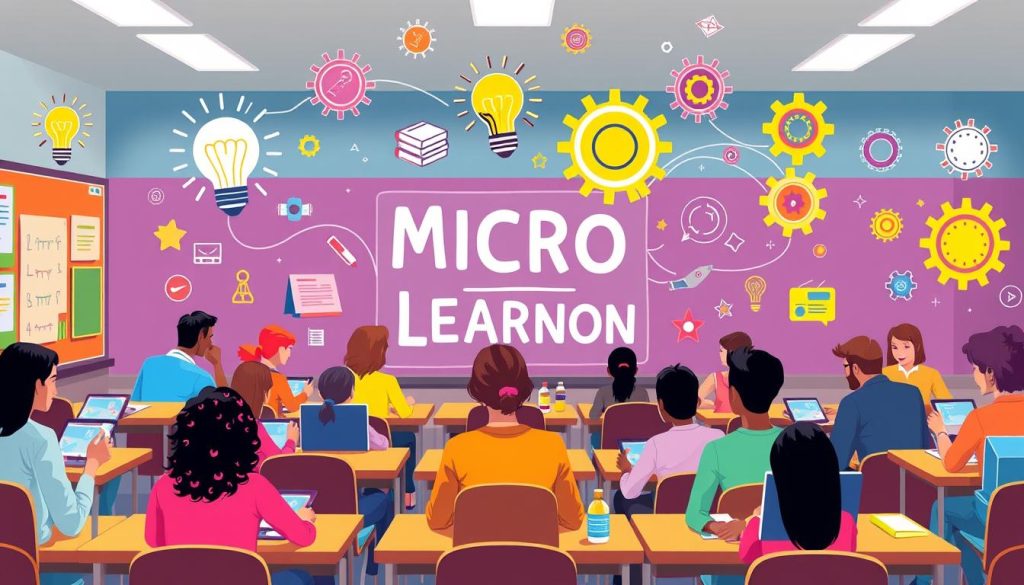
Welcome to the world of micro learning. Here, bite-sized learning and online education change how we learn new things. As someone in the field, I’m thrilled to show you how micro learning can help in today’s fast world.
In Nigeria, busy professionals are turning to micro learning to improve their skills quickly. It’s a flexible, easy way to learn at your own speed.


By using micro learning, you can manage your learning journey and reach your goals. It’s great for boosting your career or just learning more. Micro learning is the ideal choice.
Introduction to Micro-Learning
Micro learning is a strong tool for learning new skills quickly. It focuses on short, easy-to-digest lessons. This makes it perfect for those with tight schedules who want to learn anytime, anywhere.
Key Takeaways
- Micro learning is a flexible and accessible approach to education
- Micro learning is perfect for busy professionals who want to learn at their own pace
- Micro learning can help you achieve your career goals and enhance your knowledge
- Micro learning is a powerful tool for learning new skills and knowledge
- Micro learning is becoming increasingly popular in Nigeria and around the world
- Micro learning can be used in conjunction with online education to create a comprehensive learning experience
What is Micro-Learning and Why It Matters
Exploring micro learning, I find it fascinating. It’s based on learning science, showing that short bits of info stick better than long lessons. This is crucial in today’s fast world, where we all have short attention spans.
Micro learning beats traditional learning in many ways. It lets you learn whenever and wherever you want. You can use videos, podcasts, and quizzes to learn. This is great in places like Nigeria, where getting to school can be hard.
Micro learning has many advantages:
- It helps you remember info better.
- It makes learning more fun and engaging.
- It lets you learn at your own speed and time.
Knowing how micro learning works can help you learn more effectively. It’s perfect for picking up new skills or keeping up with your field. Micro learning is a smart, quick way to learn.
As we dive into micro learning, remember the role of learning science. It shapes the principles of micro learning. Together, they make learning both fun and effective.
The Benefits of Embracing Micro Learning in Today’s Fast-paced World
Exploring micro learning, I find it offers many advantages. One key benefit is time-efficient learning. It lets people learn new skills quickly. This is great in today’s fast world, where keeping up is crucial.
In Nigeria, many are using micro learning to improve their skills. With tech and finance changing fast, it’s a smart move. It helps them stay competitive and ahead.
Micro learning has several benefits:
- Flexibility: It can be done anytime, anywhere, perfect for those with busy lives.
- Personalization: You can learn what interests you at your own speed.
- Cost-effectiveness: It’s cheaper than traditional learning, making it more accessible.

Micro learning’s benefits are clear. It offers time-efficient learning and helps with skill acquisition. It’s a must-have for success in today’s fast world. Whether you’re looking to grow your career or learn more, micro learning is a good choice.
Essential Components of Effective Micro Learning
To make micro learning work, we need to break down big topics into smaller parts. This makes it easier to learn and remember. It also helps us fit learning into our busy lives without getting sidetracked.
Learning assessments are key to see how we’re doing and what we need to work on. We can use quizzes, tests, or evaluations to get feedback. This helps us learn better and adjust our learning plan.
By using content chunking, managing our time, and checking our progress, we can make learning fit our needs.
Content Chunking Strategies
Content chunking means breaking down big info into smaller bits. We can do this by focusing on main ideas and breaking down big topics. Using clear headings helps organize the content.
Time Management in Micro Learning
Good time management is key in micro learning. It helps us use our time wisely. We can do this by setting learning goals, scheduling learning sessions, and avoiding distractions.
Assessment and Progress Tracking
Checking our progress and learning is important. It helps us see how we’re doing and what we need to improve. We can use quizzes, tests, or tools to track our progress.
Implementing Micro Learning in Your Daily Routine
To make micro learning a part of your daily life, it’s key to develop daily learning habits that fit your schedule. Just 15-30 minutes each day can be enough to learn something new. This way, you can make micro learning a natural part of your routine.
Continuous education is a big part of micro learning. It means learning something new every day. You can do this by reading, watching videos, or taking online courses. This keeps you updated with the latest in your field.
Here are some ways to add micro learning to your daily routine:
- Set aside time each day for learning.
- Use mobile apps or online platforms for learning materials.
- Create a schedule that includes learning and review time.
By following these tips, you can learn the skills needed to succeed today. Remember, the secret to successful micro learning is to make it a habit. Stay consistent in your efforts.
Top Tools and Platforms for Micro Learning Success
To succeed in micro learning, you need the right tools and platforms. As a busy professional in Nigeria, you need resources that fit your local needs. Micro learning apps, online learning platforms, and Nigerian educational resources are perfect for this.
Mobile apps are great for learning on the go. They’re perfect for busy professionals who are always on the move. Apps like language learning tools and professional development platforms offer quick learning sessions.
Mobile Apps for On-the-go Learning
- Language learning apps like Duolingo and Babbel
- Professional development platforms like LinkedIn Learning and Coursera
- Educational resources like Khan Academy and TED Talks
Desktop solutions are better for focused study times. Online learning platforms like Udemy and edX have a wide range of courses. They support your micro learning journey.
Nigerian-specific Learning Resources
Nigerian educational resources are also available. They offer content tailored to local needs. You can find online learning platforms, educational websites, and mobile apps for areas like business, technology, and healthcare.
Overcoming Common Micro Learning Challenges
As I journey through micro learning, I’ve hit many learning obstacles. To beat these, using micro learning solutions is key. A big educational barrier is keeping motivation up, especially with busy schedules or no internet.
To stay on track, I break my learning into small bits. This lets me focus on one thing at a time. It helps me beat learning obstacles and keep moving forward. Also, using micro learning solutions like mobile apps and offline stuff helps when internet is scarce.
Some ways to tackle common micro learning hurdles include:
- Creating a schedule and sticking to it
- Using reminders and notifications to stay on track
- Finding a quiet, distraction-free space to learn
- Utilizing offline resources and mobile apps

By facing and solving these learning obstacles, I make my micro learning better and more productive. Using these micro learning solutions helps me get past educational barriers and reach my learning goals.
Measuring Your Micro Learning Progress
To measure your micro learning progress, set goals that match your personal or work needs. Break down big goals into smaller tasks. This way, you can see how far you’ve come and adjust your path as needed.
Adaptive learning strategies are key to tracking your progress. They let you learn in a way that fits you best. Use apps or online tools that offer learning paths and feedback. Tools like learning management systems, spreadsheets, and habit apps are great for tracking.
Regularly check your progress and make changes based on what you learn. This might mean focusing on certain areas, changing your study schedule, or finding new resources. By using milestones, tracking, and adaptive learning, you’ll reach your micro learning goals.
Setting Achievable Milestones
- Identify specific learning objectives
- Break down objectives into smaller tasks
- Establish a realistic timeline for completion
Tracking Methods and Tools
Use both digital and paper tools to track your progress. Apps, spreadsheets, and journals can keep you organized and motivated. They help you stay on track with your micro learning journey.
Creating Your Personal Micro Learning Strategy
To make a good micro learning plan, you need to know how you learn best. This means figuring out if you learn better by seeing, hearing, or doing. Knowing your learning style helps you pick the right mix of learning methods for you. This could include videos, podcasts, and quizzes.
Also, you should plan out when you will learn. This means fitting learning into your busy life. You might learn during your lunch break or right after work. This way, you can keep up with your learning and stay excited about it.
Here are some steps to plan your learning time:
- Look at your daily routine and find times for learning
- Focus on the most important things you want to learn first
- Use a planner or calendar to keep track of your learning
By mixing up your learning and planning your time, you can make learning fun and effective. This way, you can reach your goals, whether for work or personal growth.

Conclusion: Taking Your First Steps into Micro Learning
As we wrap up our exploration of micro learning, I hope you now see its value. Your micro learning journey is a long-term effort. It needs patience, persistence, and a flexible mindset.
By making micro learning a part of your daily life, you’re not just learning new things. You’re also developing a mindset of continuous growth and adaptability. This mindset will help you in both your personal and professional life, especially in Nigeria’s changing world.
Start by figuring out how you learn best, creating a schedule that works for you, and trying out different micro learning methods. Remember, what works for someone else might not work for you. So, don’t be afraid to explore and find what suits you.
Face the challenges and celebrate your wins. With hard work and an open mind, you’ll reach your full potential. This will set you up for success in your lifelong learning journey.
FAQ
What is micro learning and how does it differ from traditional education?
Micro learning breaks down education into small, easy-to-digest chunks. It’s different from old-school learning because it’s quicker, more fun, and fits busy lives.
What are the core principles of micro learning?
Micro learning focuses on short, interactive sessions. It’s based on learning science, showing that brief, engaging lessons work best for learning and remembering.
How can micro learning benefit me in my daily life and career?
Micro learning saves time and boosts productivity. It helps you learn new skills quickly. This keeps you ahead in your career and personal growth.
What are the essential components of effective micro learning?
Good micro learning has chunked content, time management, and tracking progress. These ensure your learning is effective and measurable.
How can I integrate micro learning into my daily routine?
To add micro learning to your day, spot learning chances and plan your time. Make it a habit to stay on top of your learning.
What are the top tools and platforms for micro learning success?
Many apps, desktop tools, and Nigerian learning resources help with micro learning. They offer flexible learning options tailored for Nigerian professionals.
How can I overcome common micro learning challenges?
To beat common hurdles, stay motivated, avoid distractions, and handle tech issues. With the right strategies, you can succeed in micro learning.
How can I measure my micro learning progress?
Track your progress by setting goals and using tools. Adjust your strategy as needed. This helps you see how far you’ve come and keep improving.
How do I create a personalized micro learning strategy?
Start by figuring out how you learn best. Then, plan a schedule that works for you. Mix up your learning methods for a well-rounded experience. This way, you get the most out of micro learning.